By the Light of the Moon: Create a Moon Garden
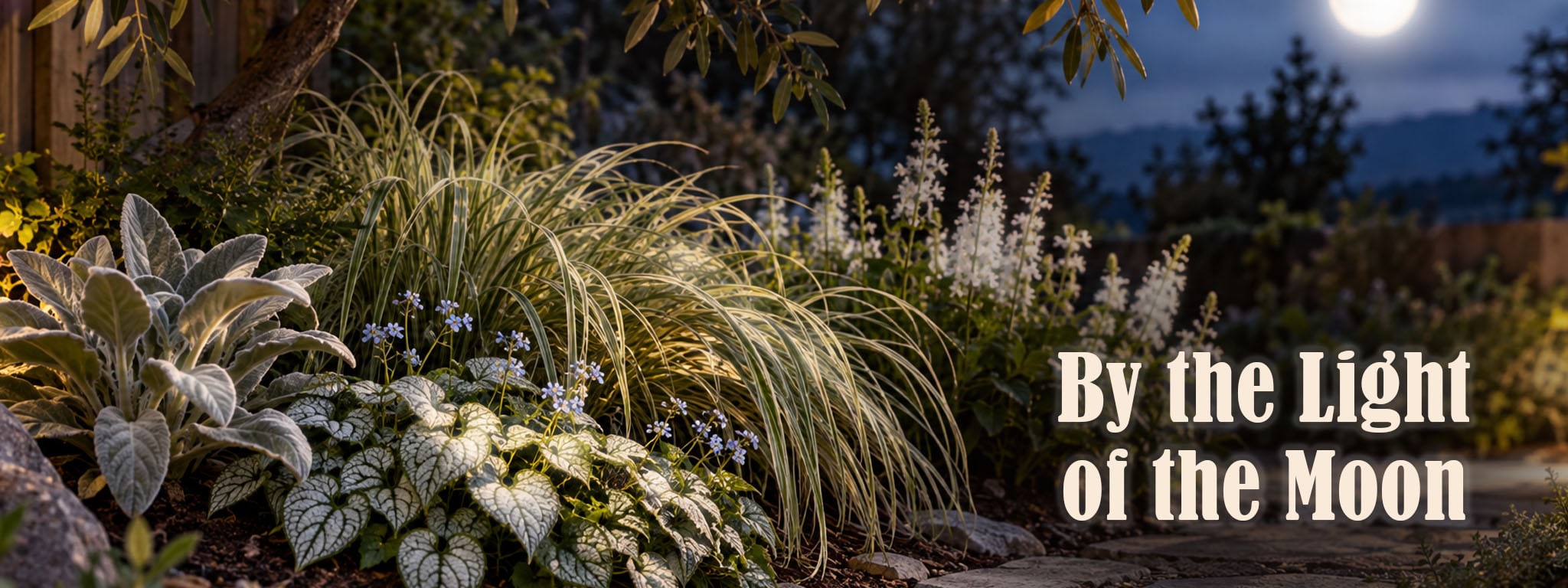 By the Light of the Moon: Create a Moon Garden
White blooms, silvery foliage and a little moonlight can give your garden an entirely different life after dark.
As daylight fades, something magical happens in a garden filled with whites, silvers and pale foliage.
Colors that may seem quiet during the day begin to stand out against the darkness. White flowers catch the last bit of evening light. Silvery leaves seem to glow. Fragrant blooms become even more noticeable as you slow down and spend a little time outside.
And during spooky season? Well, a garden that comes alive under a full moon feels especially appropriate.
Werewolves optional.
What Is a Moon Garden?
A moon garden is designed to be enjoyed in the evening, using plants with white or pale flowers, silver foliage and variegated leaves that remain visible as the surrounding garden gets darker.
You don't need to plant an entire garden in white. A few thoughtfully placed plants can create the effect.
The secret is contrast.
White flowers seem brighter against dark surroundings, while silver and gray foliage reflect available light. Repeat those lighter colors throughout the space and your eye naturally follows them through the garden.
Choose Plants for the Light You Have in Your Garden During the Day
A moon garden may be designed to shine after sunset, but the plants still need the right growing conditions during the day.
Start by looking at how much sunlight your space receives. Then choose a mix of white blooms, silver foliage and variegated leaves suited to that exposure.
You don't need every plant on the list. Choose a few different heights, flower shapes and foliage textures, then repeat some of your favorites to pull the garden together.
For Full Sun
If your garden receives plenty of direct sunlight during the day, you have lots of white-flowering and silver-foliage plants to choose from.
White Blooms
White Roses • White African Daisy • White Yarrow • White Lantana • Santa Barbara Daisy • White Verbena • White Salvia • Sweet Alyssum
Silver & Pale Foliage
Lamb's Ear • Dusty Miller • Artemisia 'Silver Mound' • Blue Fescue • Woolly Lavender • Santolina • Lomandra 'Platinum Beauty' or 'Arctic Frost'
Mixing the two is what creates the magic. White flowers become more noticeable as daylight fades, while silver and gray foliage continues to catch available light even when nothing is blooming.
For Bright or Part Shade
A spot that receives morning sun, filtered light or part-day shade can make an equally beautiful moon garden. You'll simply want plants that prefer those conditions.
White Blooms
White Cyclamen • Gardenia • Arabian Jasmine • White Azalea • White Calla Lily • White Begonia • White Pansies
Silver & Variegated Foliage
Silver Heuchera • Silver Dragon Lilyturf • Variegated Flax Lily • Variegated Pieris japonica • Lamium • Silver Dichondra • Variegated Carex • Silver Brunnera
Against the deeper greens of a shaded garden, white flowers and pale foliage can create especially striking contrast as evening arrives.
Whether you're planting in sun or part shade, the idea is the same: choose plants that will thrive in the light you have during the day—and let their whites, silvers and pale foliage take on a whole new look after dark.
Don't Forget Fragrance
A moon garden isn't only about what you see.
Once you're outside in the evening, fragrance becomes part of the experience, too. Plants such as gardenia, Arabian jasmine, roses and lavender can add another dimension to a space meant to be enjoyed after the sun goes down.
Place fragrant plants where you'll actually experience them, near a patio, beside a walkway, close to an open window or next to your favorite place to sit.
Design It From Where You'll See It
One of the simplest ways to plan a moon garden is to start with where you spend your evenings.
Maybe that's the view from the kitchen window, the path to your front door, a patio where you eat dinner or your favorite chair outside.
Put the brightest white blooms where you'll see them from that spot. Repeat silver foliage nearby. Then place your most fragrant plants close enough to actually enjoy them.
You don't need a whole new garden.
A moon garden can be one container beside the front door, a corner of the patio, a pathway edged with silver foliage or an entire bed designed to change character as the sun goes down.
Create a Moon Garden in a Container
For a simple moon-inspired container, choose:
Thriller: Variegated Carex or Lomandra
Blooming Filler: White Cyclamen or White Pansies
Foliage Filler: Dusty Miller or Silver Heuchera
Spiller: Silver Dichondra or Lamium
Use a charcoal or dark-colored container and those whites and silvers will stand out even more.
One Last Ingredient: A Little Darkness
Resist the urge to flood the space with bright outdoor lighting.
Moon gardens are at their best when white flowers and pale foliage can contrast against the surrounding darkness. A few warm, low lights along a path or near a seating area may be all you need.
Then let the garden, and the moon, do the rest.
And if something happens to rustle in the bushes during a full moon...
We're going to assume it's the wind.
Plant Something Worth Staying Outside For
October is a wonderful time to get plants established in the Bay Area, and a moon garden gives you another way to think about what you plant.
Look beyond traditional fall color and seek out white blooms, silver foliage, variegated leaves and fragrant favorites that can transform an ordinary garden into something beautiful after sunset.
Start with a container. Add a few plants along a pathway. Create a quiet corner near your patio. Or gradually weave whites and silvers throughout your existing landscape.
Because some gardens don't go to sleep when the sun goes down.
They glow.